

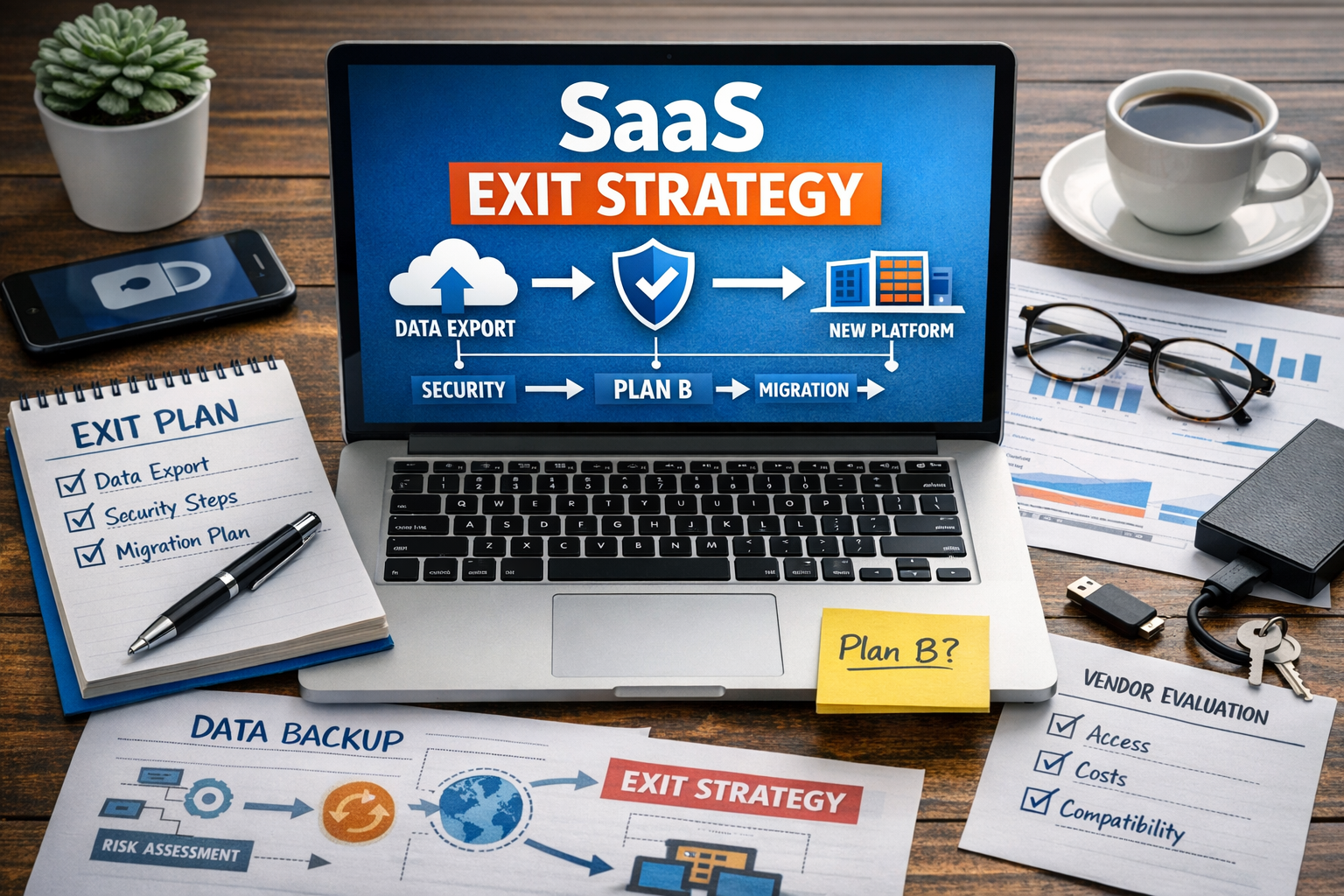
SaaS Is Easy to Start. Leaving Is the Real Test.
When you first sign up to a SaaS platform, everything feels easy.
Quick setup. Smooth onboarding. Promises of instant value.
Quick setup. Smooth onboarding. Promises of instant value.
The real test doesn’t come at the start. It comes when you need to leave.
For many small businesses, the front door is wide open, but the fire exit is locked. Data exports are incomplete, key information sits in awkward formats, and getting out suddenly requires paid vendor help.
That’s more than frustrating. It’s a business risk.
As we move into 2026, with teams increasingly made up of people and AI working side by side, your advantage comes from data you can move, reuse, and trust. If your data can’t leave a platform cleanly, you don’t fully control how your business runs. Your timelines, options, and costs end up being decided for you.
Why This Matters Even More in 2026
The question of “how do we get out if we need to?” is sharper than ever.
Most businesses don’t rely on one system anymore. Data is spread across SaaS platforms, integrations, plug‑ins, and automation tools. When a supplier changes pricing, features, or risk profile, you can’t just swap tools overnight. You either move your data cleanly or you stay put.
Security pressure makes this harder. Breaches and data incidents are happening at scale, and exits often happen under stress. That’s exactly when poor exit planning hurts the most. A backup exit strategy is what stops “we need to move” turning into “we can’t”.
Attackers are also far more focused on credentials and data pathways. These are the same pathways your team relies on during exports and migrations. Data movement is no longer a background task. It’s a moment of increased exposure.
Being stuck also costs money long before you factor in vendor exit fees. Data incidents are expensive, and a rushed or poorly controlled migration can make an already difficult situation worse.
In 2026, the real question isn’t whether you’ll ever need to move data. It’s whether you’ll be able to do it cleanly, safely, and on your terms.
The Hidden Cost of the Proprietary Trap
A weak exit plan doesn’t just limit flexibility. It quietly drives up day‑to‑day costs.
When data is hard to move, spending becomes sticky. You can’t easily right‑size, consolidate tools, or switch to a better‑fit platform without turning it into a major project. That’s how waste stays hidden in plain sight.
The real cost isn’t the monthly bill. It’s the lack of choice.
Every renewal, pricing change, or product shift becomes a forced decision instead of a considered one. You’re reacting instead of choosing.
A proper backup exit strategy changes that. It gives you control. You can compare options, plan migrations on your timeline, and make decisions based on value rather than inertia. In simple terms, it turns “we can’t leave” into “we can move when it makes sense”.
Protecting the Move Itself
Once you decide to move data, the migration becomes a high‑risk moment. Not because migrations are unsafe by default, but because they concentrate exactly what attackers look for:
- High‑level access
- Multiple active admin sessions
- Large volumes of data moving at once
During a migration, your team is often signed into several powerful systems at the same time. This is where session hijacking becomes a real concern. An attacker doesn’t need to steal a password if they can reuse a session that’s already signed in.
That’s why protecting the move is just as important as planning the exit.
Good practice includes:
- Using phishing‑resistant sign‑ins for admin and migration accounts
- Tightening session controls so privileged access expires quickly
- Running migrations from managed, patched, protected devices
- Monitoring closely for unusual access while data is moving
This layered approach reduces risk during one of the most sensitive points in the lifecycle of your data.
Ownership Is an Ongoing Discipline
The businesses that do well over the next few years won’t just adopt new tools. They’ll stay flexible as tools change.
In a world of SaaS sprawl and AI‑driven workflows, that flexibility comes from clean data, clear ownership, and the ability to move when you need to. Exit planning isn’t pessimistic. It’s practical.
At Bespoke IT Solutions, we help organisations build exit‑ready foundations across their technology stack, so change doesn’t become a crisis.
If you’d like support reviewing your vendors or putting a realistic backup exit strategy in place, get in touch for a technology consultation.