

AI‑Driven Fraud Is Targeting Accounts Payable. Here’s How to Stay Ahead
Finance teams are under pressure to keep payments moving. Attackers know this.
AI‑driven fraud is making fake requests look real. The biggest risk is no longer spotting a suspicious message. It is whether your payment process protects you even when everything looks genuine.
According to the FBI’s 2025 Internet Crime Report, business email compromise cost organisations more than three billion dollars last year. It is now one of the most financially damaging forms of cybercrime.
AI has made these attacks harder to spot. The right response is not asking your team to be more suspicious. It is putting simple checks around high‑risk actions.
Why Accounts Payable teams are targeted
Accounts Payable sits where trust and timing meet.
Your team handles invoices, supplier details, and payments, often under pressure. For attackers, that combination is ideal.
Most fraud does not involve breaking into systems. It relies on impersonation, posing as a trusted supplier, colleague, or senior leader to redirect payments.
AI has made this faster and easier. Messages that once took time and skill to create can now be generated at scale and tailored to your business.
What AI‑enhanced fraud looks like day to day
Emails that blend into normal work
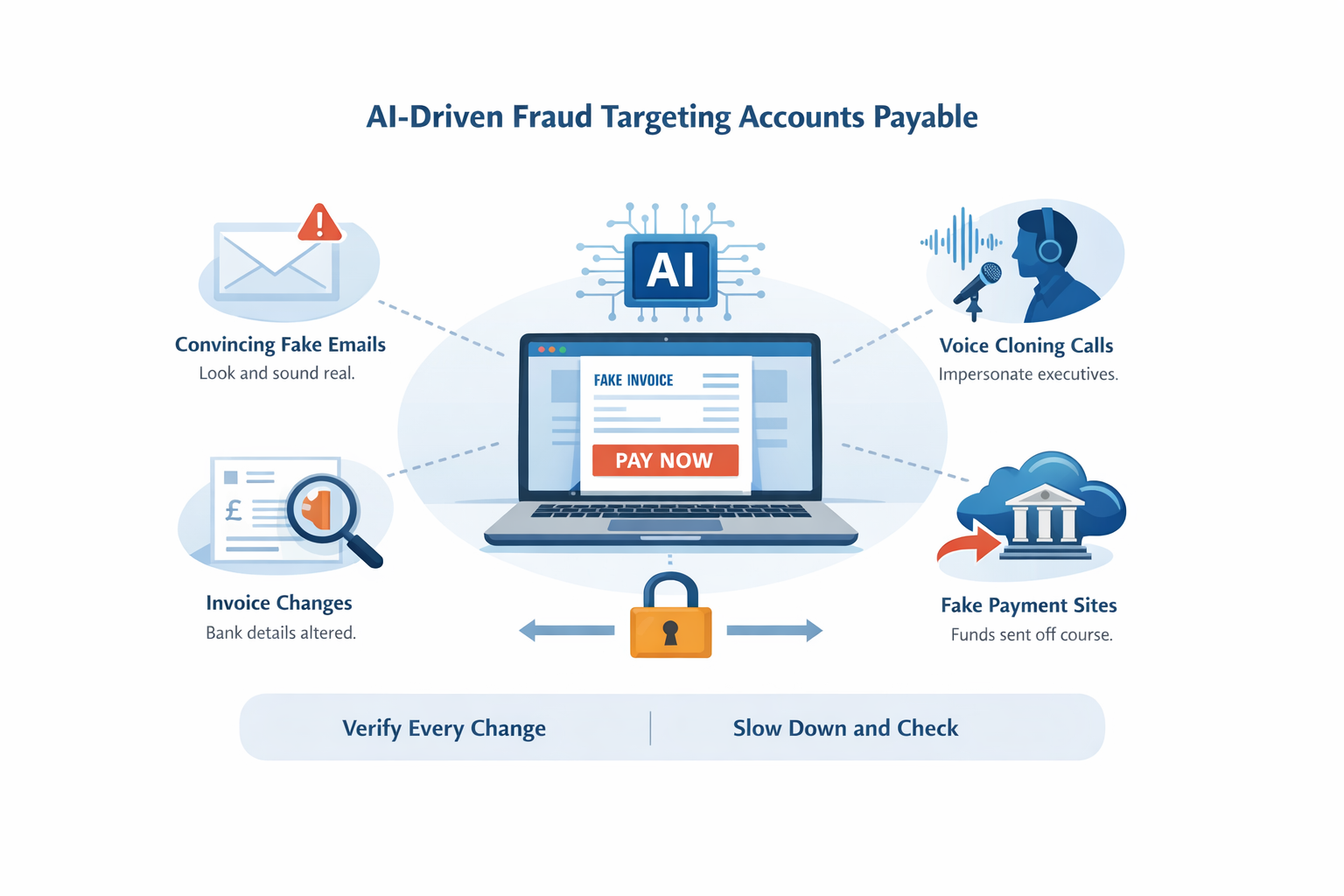
Modern fraud emails are well written and match the tone of the person being impersonated. They reference real projects, invoices, and payment runs.
For teams handling large volumes of routine messages, that familiarity lowers defences.
Invoice changes and payment redirection
Attackers often intercept real invoice conversations and quietly change bank details. Sometimes they resend a genuine invoice with a small edit. Sometimes they claim a supplier has updated their account.
Because the surrounding context is real, the request looks normal.
Voice cloning and executive impersonation
AI tools can now copy someone’s voice from a short recording. This makes phone calls and voicemails sound completely convincing.
For teams used to verbal approval on urgent payments, this removes a check many people still trust.
Why traditional checks are no longer enough
Training still matters, but the signals people were taught to look for are disappearing.
When a fake request looks exactly like a real one, the risk should not sit with the person reading it.
The organisations that reduce fraud shift the focus from detection to process. They assume messages will look convincing and build checks that work anyway.
Build the process around the risk
Make out‑of‑band checks standard
Any request to change supplier bank details or approve an urgent payment should be confirmed using a separate, trusted channel.
Call a supplier using a number already on file. Check directly with a colleague. Do not reply to the same email thread.
Limit access and protect sign‑ins
Restrict who can make changes in financial systems. Use multi‑factor authentication wherever possible.
Extra sign‑in checks can slow things down or stop fraud before money moves.
Support a culture that allows people to pause
Fraud prevention works when people feel safe questioning requests, even from senior leadership.
Pausing a payment to check it is not blocking progress. It is good process.
Shift the burden from people to process
AI‑driven fraud will keep evolving. Your response does not need to be complex.
Clear checks. Consistent steps. A team that knows it is always right to slow down on high‑risk actions.
How Bespoke IT can help
We help finance teams reduce fraud risk without slowing the business down.
If you want to review your current controls and spot where the real gaps are, we are happy to help.
Frequently asked questions
Why are Accounts Payable teams targeted so often?
They manage payments and supplier details, making them a direct path for attackers to move money without breaking into systems.
Can training alone stop AI‑driven fraud?
No. Training helps, but strong verification processes are essential.
Is voice‑based fraud really a risk?
Yes. AI voice cloning can convincingly impersonate executives, making phone‑based approvals vulnerable without extra checks.