

AI in Education: What School Leaders Need to Get Right
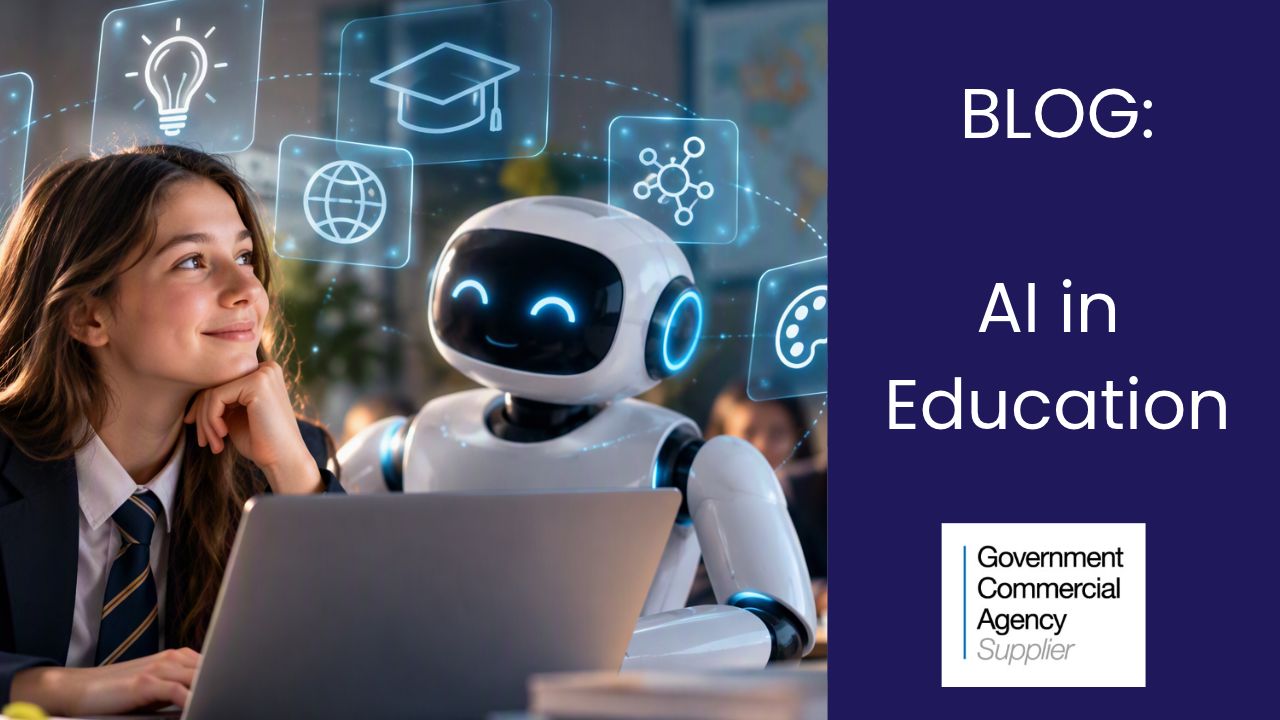
Artificial intelligence is already entering education. The challenge for leaders is ensuring that it strengthens learning, supports staff and prepares pupils for the future without compromising safeguarding, security, privacy or human judgement.
AI has moved remarkably quickly from something schools were discussing as a future possibility to something teachers and pupils can access today.
That creates an important challenge for headteachers, senior leadership teams, governors, trustees, safeguarding leads and IT leaders.
This is no longer simply a technology conversation. It is a leadership conversation involving teaching and learning, assessment, safeguarding, data protection, staff development, digital inclusion and the skills young people will need when they leave education.
THE LEADERSHIP QUESTION
The question is no longer simply, “Should we allow AI in school?” It is, “How do we prepare our school, our staff and our pupils for a world in which AI is widely available?”
Leadership Now Matters More Than the Technology
There are good reasons for schools to explore AI. Used appropriately, generative AI could provide useful support with areas such as lesson planning, educational resources, feedback, tailored support and administrative tasks.
But AI also brings important questions. AI-generated material can be inaccurate or inappropriate. Its use can create questions around personal information, pupil data, intellectual property, accountability and safeguarding.
That means successful AI adoption should not be measured by how many people are using it.
Education leaders should instead be asking whether AI is delivering a genuine educational or operational benefit while being used safely, appropriately and transparently.
1. We Need to Redefine AI Literacy
One of education’s most important responsibilities may become preparing young people to understand AI rather than simply teaching them how to operate AI tools.
It is relatively easy for a pupil to enter a question into an AI assistant. Real AI literacy involves knowing what to do with the answer.
Students increasingly need to ask:
- Can this information be independently verified?
- What might the AI system have misunderstood?
- Could the response contain bias or invented information?
- Where has the information come from?
- Is it appropriate to enter this information into an AI platform?
- Should AI actually be used for this particular task?
- Can I explain and defend the answer in my own words?
LEADERSHIP INSIGHT
Knowing how to use an AI tool is not the same as understanding AI. A pupil who can produce an impressive answer but cannot determine whether that answer is reliable is not yet AI literate.
Young people need subject knowledge if they are going to recognise when an AI-generated answer is wrong. They also need critical thinking and digital judgement to use these systems responsibly.
In that sense, AI could make knowledge and critical thinking more important, not less.
2. Assessment and Academic Integrity Need a More Sophisticated Conversation
Much of the early debate around generative AI in education understandably focused on cheating.
The concern is legitimate, but concentrating entirely on detecting AI-generated work risks avoiding a more difficult question.
What are we actually trying to assess?
If an assignment is intended to demonstrate reasoning, subject knowledge or genuine understanding, schools need ways of assessing those qualities when pupils can access tools capable of generating sophisticated written responses.
This may require schools to develop much greater clarity around:
- when the use of AI is permitted;
- what acceptable AI assistance looks like;
- when AI use needs to be acknowledged;
- which tasks must be completed independently;
- how pupils demonstrate their reasoning and sources;
- how teachers establish that genuine learning has taken place.
The goal should not simply be to catch pupils using AI. It should be to ensure AI does not remove the learning from the learning process.
3. Teacher Workload May Be One of AI’s Biggest Opportunities
There is understandably considerable interest in what AI can do for pupils. However, one of its most immediate benefits could be helping teachers and other education professionals with appropriate, repeatable tasks.
The most valuable AI implementation may not be a futuristic classroom filled with AI tutors.
It could be something far less dramatic.
If AI can appropriately reduce the time spent on certain administrative or preparatory tasks, allowing more time for teaching, mentoring, planning or direct interaction with pupils, then it deserves serious consideration.
Where can AI remove low-value workload without removing high-value human judgement?
IMPORTANT CONSIDERATION
An AI-generated result should not automatically be accepted because it was produced quickly. Human oversight remains important when deciding whether material is accurate, suitable and appropriate for the pupils and context involved.
4. Personalised Learning Is Exciting, but Evidence Must Lead
AI-powered tutoring and personalised learning attract considerable attention.
A system capable of adapting explanations, guidance and practice to an individual learner could offer interesting educational opportunities.
But personalisation should not automatically be equated with better education.
Before adopting a technology, education leaders should ask what evidence exists that it can improve the particular outcome their school wants to address.
Questions worth asking include:
- What educational problem is the technology intended to solve?
- What evidence supports its use?
- Has its effectiveness been independently evaluated?
- Is it appropriate for the relevant age group?
- How will teachers monitor its impact?
- Could its implementation unintentionally disadvantage certain pupils?
An impressive technology demonstration is not the same thing as a proven educational outcome.
5. AI Must Not Come at the Expense of Human Relationships
Education is not simply the transfer of information.
Schools help young people develop confidence, resilience, curiosity, communication, collaboration and judgement.
Teachers also understand context. They build relationships, notice changes in behaviour and wellbeing and understand the individual circumstances surrounding a pupil.
AI may support teachers, but it should not reduce the value of professional judgement or the trusted relationships educators build with young people.
A PRINCIPLE WORTH PURSUING
Human-led, AI-supported education.
RATHER THAN
AI-led, human-supported education.
Technology should create more opportunities for valuable human interaction, not gradually engineer them out of the school day.
6. Could We Create an AI Capability Divide?
Historically, discussions about digital inclusion have often focused on whether pupils have access to suitable devices and connectivity.
AI introduces another dimension.
Two pupils might have identical laptops and internet access but completely different abilities to use AI effectively, critically and safely.
Differences in staff knowledge, pupil training and school-wide AI strategies could therefore become increasingly important.
Digital access matters. But access without capability could create a new form of educational inequality: the AI capability divide.
This is why staff training and AI literacy deserve to be viewed as educational priorities rather than optional additions to an IT project.
7. Safeguarding, Privacy and Cyber Security Need to Be Involved from the Beginning
This is arguably one of the most important considerations for education leaders.
When a school begins using AI, questions about teaching and learning can quickly overlap with data protection, cyber security, safeguarding, intellectual property, system access and accountability.
A member of staff experimenting with a publicly available AI application is different from an institution formally adopting an approved AI system.
LEADERSHIP PERSPECTIVE
AI adoption is not only a teaching and learning decision. It is also a data, security, safeguarding and governance decision.
Before adopting AI more widely, leaders should consider:
These questions are not reasons to avoid AI. They are reasons to approach it professionally.
8. Governors and Trustees Need to Understand AI Too
AI cannot simply sit with the school’s IT team or IT provider.
It increasingly crosses curriculum, pastoral care, safeguarding, human resources, administration, assessment and information governance.
That means governors and academy trustees need sufficient understanding to provide appropriate strategic oversight.
They do not need to become AI engineers.
But they should be in a position to ask informed questions.
- Why are we adopting this technology?
- What problem are we trying to solve?
- What evidence supports the decision?
- What are the risks?
- What controls do we have in place?
- What training have staff received?
- How are pupils being educated about responsible AI use?
- How will we know whether the technology is delivering a genuine benefit?
AI governance does not require every leader to become a technology expert. It requires leaders to understand enough to ask the right questions.
Think Strategy Before Software
This may ultimately be the most important lesson for education leaders.
The first question should not be:
“Which AI platform should we buy?”
It should be:
“What are we trying to achieve?”
For example, is the priority to:
- reduce appropriate administrative workload?
- support teachers?
- strengthen pupils’ AI and digital literacy?
- prepare students for future employment?
- support particular learning requirements?
- improve access to educational support?
Only once the problem and desired outcome are understood does the technology discussion become meaningful.
That is the difference between AI adoption and AI strategy.
Five Steps Towards Responsible AI Adoption
A practical starting point for school and education leadership teams.
STEP 1
Define the Purpose
Start with the educational or operational problem you want to address, not the latest piece of software.
STEP 2
Assess the Risks
Consider safeguarding, data protection, security, accuracy, accountability and the suitability of the proposed technology.
STEP 3
Prepare Your People
Provide staff with practical guidance and clearly defined expectations around responsible use.
STEP 4
Start Carefully
Consider beginning with a clearly defined use case before deciding whether wider implementation is appropriate.
STEP 5
Measure the Impact
Review educational value, staff experience, workload and any unintended consequences rather than measuring success by usage alone.
Five Questions Every Education Leadership Team Should Be Discussing
These questions can help move the conversation from general interest in AI towards responsible decision-making.
1. What do we want AI to achieve?
Define the educational or operational outcome before choosing the technology.
2. What should our pupils learn about AI?
Look beyond prompting towards verification, ethics, critical thinking, judgement and responsible use.
3. Are our staff ready?
The capability of people using AI may be every bit as important as the capability of the technology.
4. Is our governance ready?
Connect AI conversations with safeguarding, data protection, cyber security, curriculum and acceptable-use policies.
5. How will we know whether it works?
Keep the focus on teaching, learning, inclusion, staff workload and pupil outcomes rather than technology adoption alone.
AI Doesn’t Reduce the Importance of Education. It Changes Some of Its Responsibilities.
AI is capable of producing extraordinary things.
But perhaps its biggest impact on education will not ultimately be replacing something. It may be changing what we consider valuable.
When information is instantly available, evaluating information matters.
When AI can generate an answer, understanding whether that answer can be trusted matters.
When technology can create sophisticated content in seconds, critical thinking, originality, communication and human judgement could become even more valuable.
The challenge for education leaders is not simply to introduce pupils to the latest technology. It is to prepare them for the world in which that technology exists.
The Bespoke IT Solutions View
At Bespoke IT Solutions, we believe education leaders should be excited about the possibilities of AI while remaining prepared to ask difficult questions about it.
The schools that respond best will not necessarily be those using the greatest amount of AI.
The stronger measure will be whether an organisation understands where AI genuinely adds value, where human judgement remains essential and how new technology can be introduced responsibly and securely.
For headteachers, senior leadership teams, governors, trustees, safeguarding leaders and IT teams, that means bringing education, leadership, safeguarding, governance and technology into the same conversation.
Start with the educational outcome.
Understand the risks.
Prepare your people.
Protect your data.
Then choose the technology.
Start the AI Conversation
If your school, academy, college or education organisation is beginning to explore AI, it is worth getting the foundations right from the beginning.
Bespoke IT Solutions can help you start conversations around your technology environment, cyber security, Microsoft 365, data protection and your wider IT strategy.
Technology should support your people and your educational objectives, not dictate them.