

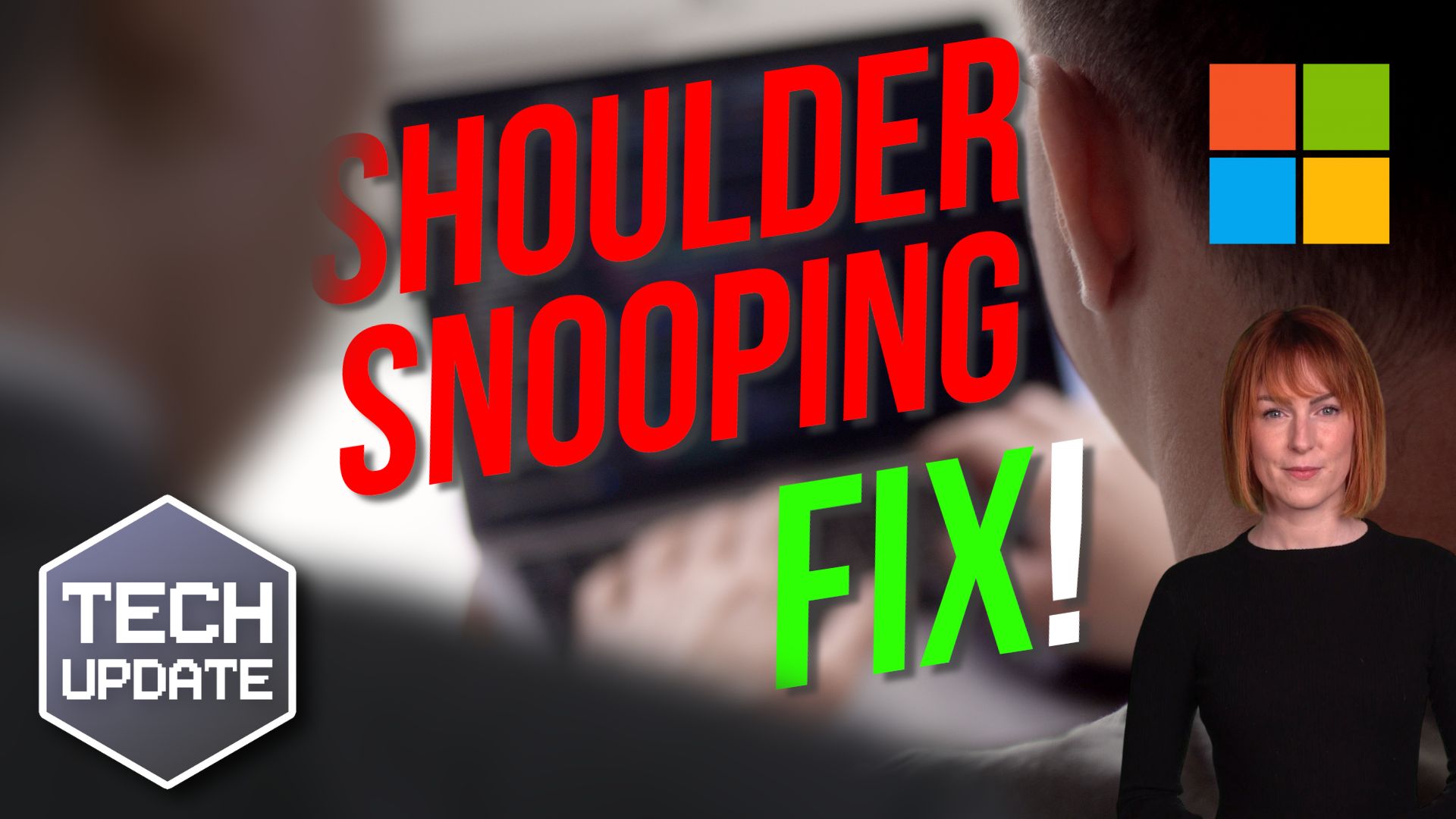
Home 9 Latest News 9 Windows 11 will warn you if someone’s snooping

Windows 11 will warn you if someone’s snooping

Ever get a creepy feeling while you’re working in a coffee shop or on the train?

Like someone’s looking over your shoulder at what’s on your screen?

It’s a real privacy concern. Especially when you’re dealing with sensitive emails or confidential documents. Or even when you simply prefer to keep your screen to yourself.

Well, Microsoft may soon have your solution.

A new privacy feature called Onlooker Detection is reportedly in the works for Windows 11. It’s designed to do exactly what it says on the tin: Spot when someone is trying to glance at your screen and let you know about it.

This clever bit of tech builds on something already in Windows, called Presence Sensing. Right now, that’s used to dim or lock your screen when you walk away and wake it up when you return (it works with Windows Hello for seamless sign-ins).

But this new development takes things a step further. If an onlooker is detected, your laptop can automatically dim the screen to make it harder for them to read. Or send you a warning. Or both.

The goal here is simple: Better privacy, without you having to lift a finger.

Of course, your laptop needs the right hardware to make this work. That’s a presence sensor, known technically as Human Presence Detection (HPD).

It’s something found in newer laptops, often those using chips from Qualcomm, AMD, or Intel. If you’re not sure whether your device has it, you can check in the Settings app under System > Power & battery.

While Microsoft hasn’t officially confirmed this feature just yet, it has shown up in recent Windows 11 preview builds. So, while we can’t say for sure when it’s coming, the signs are promising.

Frankly, it’s about time. Data privacy matters more than ever. This kind of smart, subtle protection could make a real difference. It’s one more way Microsoft is trying to make Windows 11 not just more powerful, but more personal and private too.

Would a feature like this give you more peace of mind when working in public?
Recent Posts

Messaging app scams are rising.

Messaging app scams are rising.

Messaging app scams are rising. Here’s what businesses need to know. Messaging app scams are becoming a growing risk for businesses of all sizes. Tools like WhatsApp, Microsoft Teams, Signal, and SMS are used every day to keep work moving, but criminals are now using...

Why Passwords Are Still Letting Businesses Down

Why Passwords Are Still Letting Businesses Down

Why Passwords Are Still Letting Businesses Down Most businesses still rely on passwords to protect their systems. However, that approach no longer fits the way people work. Some passwords are strong. Many aren’t. Worse still, people reuse most of them somewhere else....

The hidden cyber risk in everyday web habits

The hidden cyber risk in everyday web habits

The hidden cyber risk in everyday web habits Most cyber attacks don’t start with advanced hacking. They start with everyday behaviour that feels harmless at the time. When work and personal life share the same devices, browsers, and logins, small habits can quietly...

AI at Work: Why People Still Matter More Than Ever

AI at Work: Why People Still Matter More Than Ever

AI at Work: Why People Still Matter More Than Ever   The problem many businesses are feeling   Right now, a lot of people feel uneasy about AI at work. Some worry it might replace jobs. Others feel pressure to keep up with tools they do not fully understand....

Why Multi Factor Authentication isn’t enough!

Why Multi Factor Authentication isn’t enough!

Adversary‑in‑the‑Middle Attacks: Why MFA Alone Isn’t Enough You click a link, sign in, approve the MFA prompt, and get on with your day. Completely unaware that someone else just logged into your account at the same moment. That scenario surprises many organisations,...

AI in IT Operations and Automation

AI in IT Operations and Automation

AI in IT Operations and Automation: What’s Real and What’s Just Hype AI is everywhere right now. Every tool claims to be “AI‑powered”. Every vendor promises faster fixes, fewer issues, and smarter IT. It can all start to sound impressive and confusing at the same...

Why “break‑fix IT” costs more than managed support

Why “break‑fix IT” costs more than managed support

Why “break‑fix IT” costs more than managed support When something breaks, you call IT. When it’s fixed, you pay the bill. On the surface, break‑fix IT feels sensible. You only pay when you need help. No monthly commitment. No long contracts. It can feel like the...