

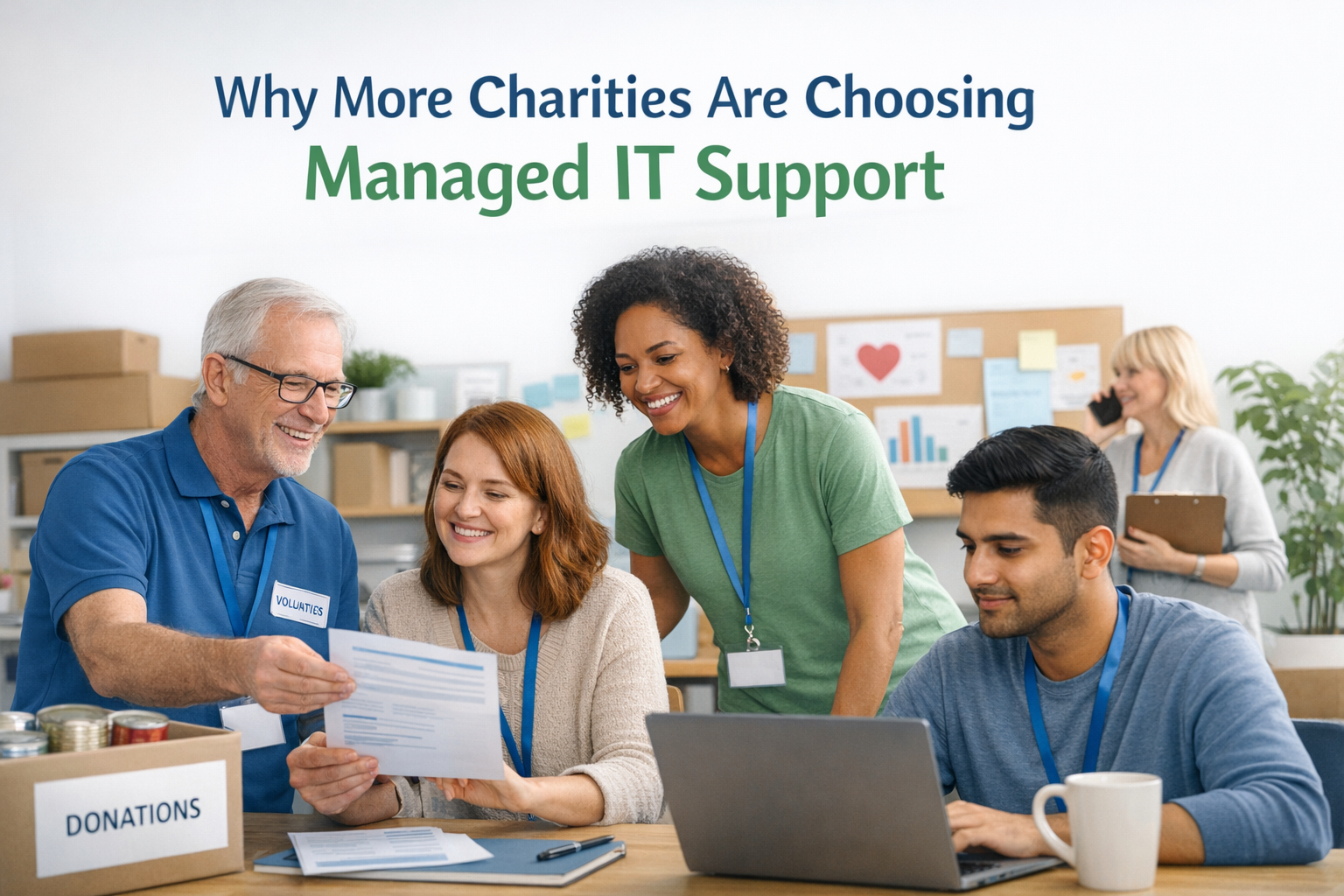
Why more charities are choosing managed IT support
And what it really means for cost and peace of mind
The problem charities face
Running a charity is hard enough without IT getting in the way.
Budgets are tight.
Teams are small.
Volunteers change often.
And technology is now part of almost everything you do.
Teams are small.
Volunteers change often.
And technology is now part of almost everything you do.
From donor systems and fundraising platforms to remote working and data protection, your IT has to work. When it doesn’t, it pulls time and energy away from the people and causes you’re here to support.
Many charities tell us the same thing.
They’re relying on ageing systems, part‑time help, or someone “who knows a bit about IT”.
It works until it doesn’t. And when things go wrong, the cost and disruption can be stressful and unpredictable.
They’re relying on ageing systems, part‑time help, or someone “who knows a bit about IT”.
It works until it doesn’t. And when things go wrong, the cost and disruption can be stressful and unpredictable.
Our solution: IT support built around charities, not businesses
This is where managed IT support can make a real difference.
With Bespoke IT, you get a dedicated team looking after your systems day to day. We handle the issues, keep things secure, and make sure your technology supports your work rather than slowing it down.
You’re not passed from person to person.
You speak to real people who know you, understand your setup, and care about getting things fixed properly.
You speak to real people who know you, understand your setup, and care about getting things fixed properly.
And because every charity is different, your support is shaped around your goals, your risks, and your budget. Nothing off the shelf. Nothing unnecessary.
What this means for you
Clear, predictable costs
One of the biggest worries for charities is unexpected IT spend.
Managed support replaces surprise bills with a clear monthly cost. You know where you stand, you can budget properly, and you’re not hit with expensive fixes when something breaks.
For many charities, this works out far more affordable than employing internal IT staff or reacting to problems as they appear.
It also means fewer emergencies, fewer disruptions, and far less stress.
Stronger security without the headache
Charities hold sensitive information. Donor details, financial data, and personal records all need protecting.
Cyber threats are increasing, and charities are often targeted because they don’t have the time or resources to stay on top of security.
We keep your systems protected in the background.
That includes updates, monitoring, backups, and fast response if something looks wrong.
You don’t need to be an expert.
You just need to know your data and your people are safe.
You just need to know your data and your people are safe.
Less downtime, more time for your mission
When IT problems happen, they don’t just slow things down. They stop people working altogether.
With managed support, most issues are spotted and fixed before they cause disruption. And when something does go wrong, help is quick and human.
That means:
- Less time lost to technical problems
- Fewer frustrations for staff and volunteers
- More focus on the work that really matters
Access to expertise, without hiring it
Most charities don’t need a full‑time IT team. But they do need experience and guidance they can trust.
Managed support gives you access to a wide range of skills, from day‑to‑day support through to planning ahead. We help you make sensible decisions, avoid unnecessary spend, and get more value from what you already have.
It’s support when you need it, without the cost or complexity of building it in‑house.
Support that grows and changes with you
Charities evolve. Funding changes. Teams grow or shrink. Ways of working shift.
Your IT support should move with you, not hold you back.
Managed support is flexible. As your needs change, your support changes too. You’re never locked into something that no longer fits.
A balanced view
Managed IT support is an ongoing investment, and it has to be right for you.
The key is choosing a partner who understands charities, listens properly, and puts people first. Poor support feels distant and inflexible. Good support feels like part of your team.
Done properly, managed IT isn’t about spending more.
It’s about avoiding waste, reducing risk, and creating stability.
It’s about avoiding waste, reducing risk, and creating stability.
The outcome
For charities and not‑for‑profit organisations, managed IT support isn’t about technology.
It’s about:
- Knowing costs are under control
- Keeping people and data safe
- Reducing daily frustrations
- Having real people to rely on
- Getting peace of mind
That’s what allows your team to focus on what you’re here to do.