

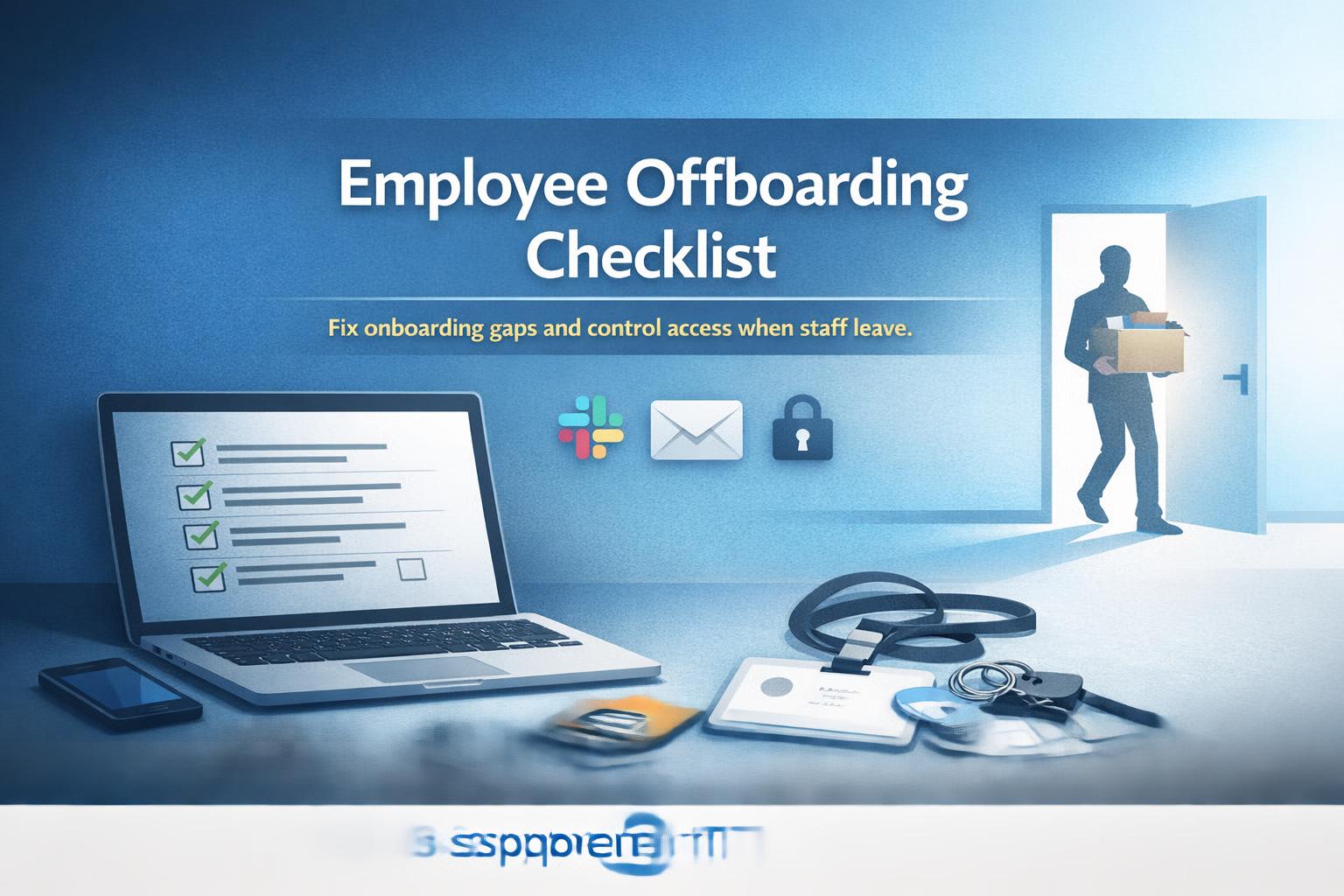
Offboarding problems don’t start when someone leaves. They start on day one
When someone leaves your business, things can feel rushed and messy. You’re chasing logins, tracking down devices, and trying to work out what they had access to.
However, most of these problems didn’t start when they resigned. They started on day one.
If you set things up properly from the start, offboarding becomes simple and controlled.
You avoid stress, reduce risk, and keep your business running smoothly.
What’s really going wrong
By the time someone hands in their notice, the outcome is already set.
In the early days, small decisions get made quickly:
- A shared login to save time
- A quick software sign-up outside IT
- A personal laptop used “just for now”
At first, these feel harmless. However, over time, they become the normal way of working.
As a result, offboarding becomes harder than it should be.
What a clean offboarding process looks like
When everything is set up properly, the process is simple and predictable.
For example:
- You switch off access in one place, and it removes access everywhere
- You wipe or collect devices quickly
- You redirect or share email
- You reassign client work
- You use pre-prepared handover notes
Because everything is connected, this usually takes 60 to 90 minutes.
What happens when it goes wrong
On the other hand, if onboarding wasn’t controlled, everything slows down.
You might find that:
- No one knows every system the person used
- Accounts were created without oversight
- Passwords sit in personal apps
- Devices are still at home
- Clients receive unexpected emails
- Subscriptions continue after they’ve left
Because of this, the process can take weeks instead of hours.
Four onboarding mistakes that lead to offboarding problems
1. Letting people sign up for tools themselves
When staff create accounts on their own, you lose visibility.
Instead, set everything up through a central login system so you stay in control.
2. Allowing personal devices without control
Temporary access rarely stays temporary.
So, provide company devices or make sure personal devices have controlled access to company data.
3. Using shared logins
Shared accounts always create problems when someone leaves.
For that reason, give each person their own login so access stays easy to manage.
4. Keeping client relationships in one inbox
When one person owns all communication, knowledge leaves with them.
To avoid this, use shared inboxes or a CRM so client communication stays with your business.
How to fix this before your next leaver
Run a simple software audit
Start by reviewing your business card statements.
Then:
- List every subscription
- Identify who owns each account
- Check if personal emails are used
- Highlight tools only one person controls
Create a device list
Next, build a simple record of:
- Who has which device
- Whether it’s managed
- What it can access
This gives you a clear picture straight away.
Move client communication into shared systems
Even small changes make a difference. For example, a shared mailbox can quickly improve visibility and continuity.
Where your IT provider should be helping
The problem
Many IT providers only get involved when someone leaves.
The solution
Support should start at onboarding. Accounts need to be set up properly, devices need to be controlled, and systems need to connect from day one.
The benefit
As a result, offboarding becomes simple, fast, and secure.
At Bespoke IT Solutions, we support you at every stage. You’ll always speak to a real person who takes the time to understand your business and get things right first time.
A simple 60 day plan
- Weeks 1 to 2: Review subscriptions and identify gaps
- Weeks 3 to 4: Build your device list and secure access
- Weeks 5 to 6: Move client communication into shared tools
- Weeks 7 to 8: Create a clear onboarding process for future hires
Frequently asked questions
How long should offboarding take?
With the right setup, it takes around 60 to 90 minutes.
How do I find unknown software tools?
Start with your card statements. Most hidden tools show up there.
Can I wipe a personal device?
Only if you set up control before the person left.
Why is single sign-on important?
It lets you remove access to everything in one step.
Should staff only use company devices?
Where possible, yes. If not, you still need controlled access.
Need help getting this under control?
The problem
If offboarding feels messy, things were likely not set up properly at the start.
The solution
We review your setup, show you the gaps, and help you put a simple, clear process in place.
The benefit
You get peace of mind, fewer risks, and a smoother way to manage your team.
Book a quick call with Bespoke IT
Or speak to a real person who will guide you through it.